
TBM 408: Basic Links

(I used to do more of these visual build posts. I miss them! If you want the messy/heavy posts, check out last week’s post on context emerging from interactions.)
A back to basics post…
Yet, not so basic…
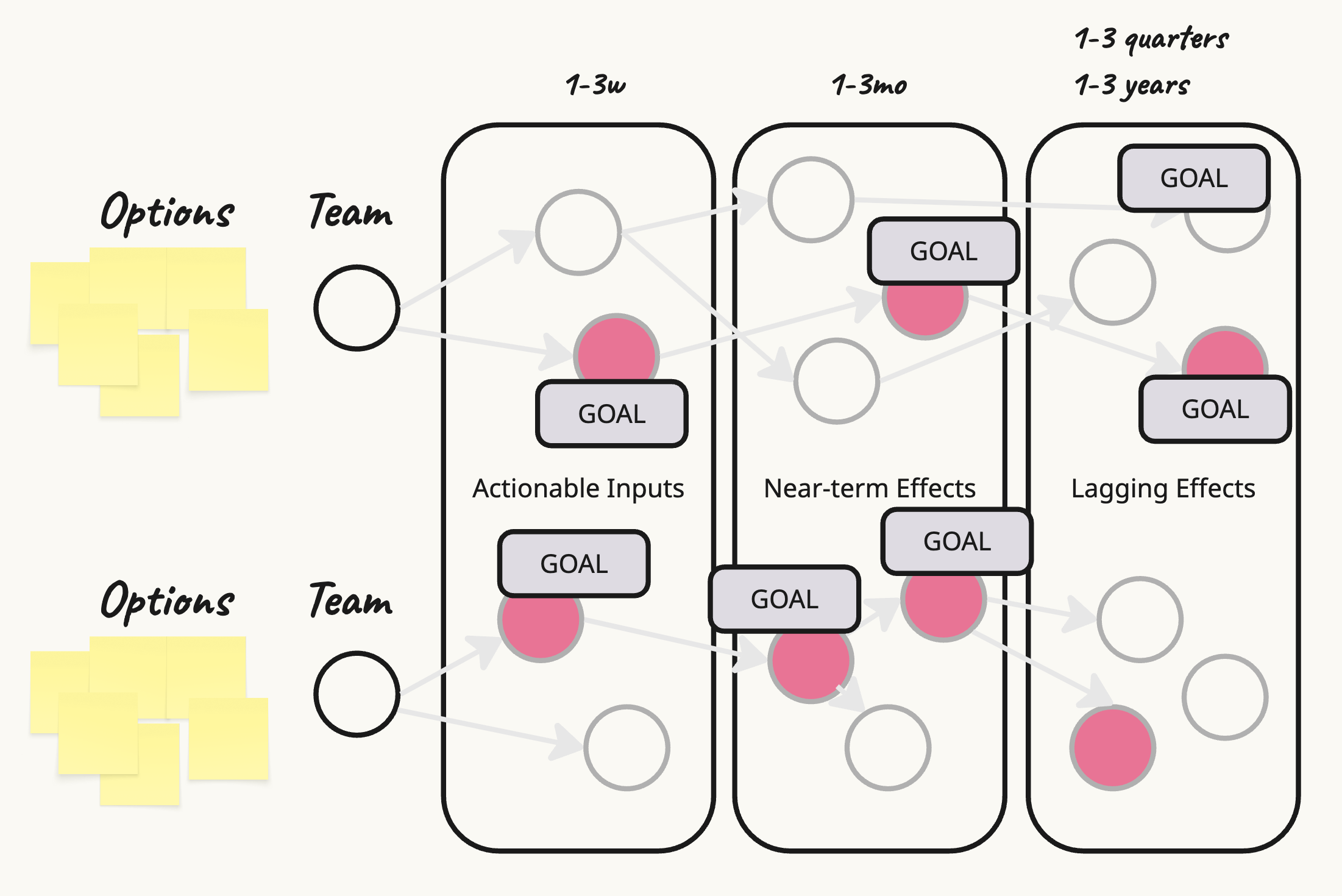
When you ship something, you’re not delivering an outcome. You’re delivering the potential of an outcome and starting a chain of effects that unfold over weeks, months, and years. You’re committing the organization to a new state that may or may not produce the results you want.
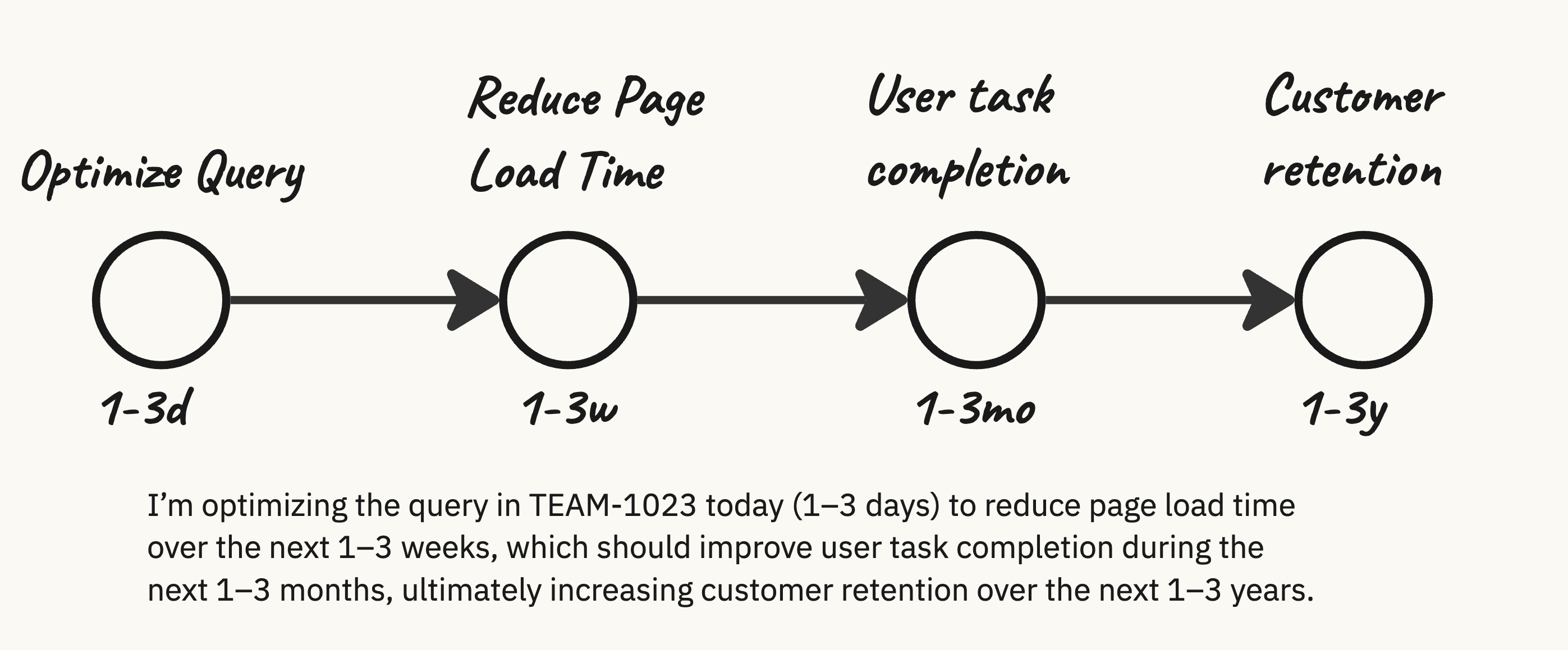
Each step in the chain is a hypothesis about what will happen next, supported by underlying assumptions. Over time we strengthen or weaken our confidence in these relationships, and areas of high uncertainty often signal both opportunity and the need for a leap of faith.
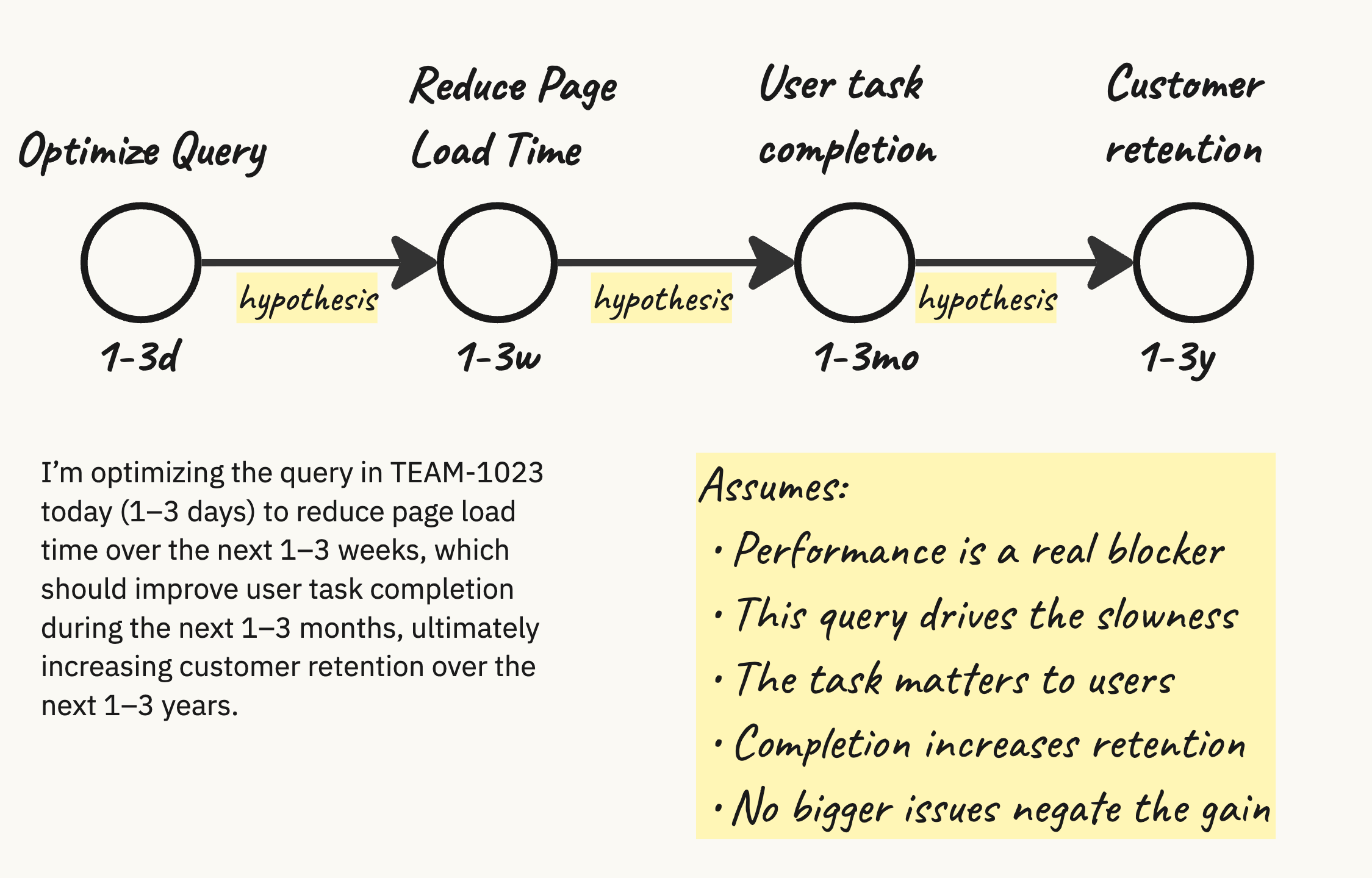
Work rarely affects just one thing. It usually sets off multiple chains at once, influencing different users, metrics, and systems in different ways. Some chains produce visible short-term results, while others only emerge months or years later.
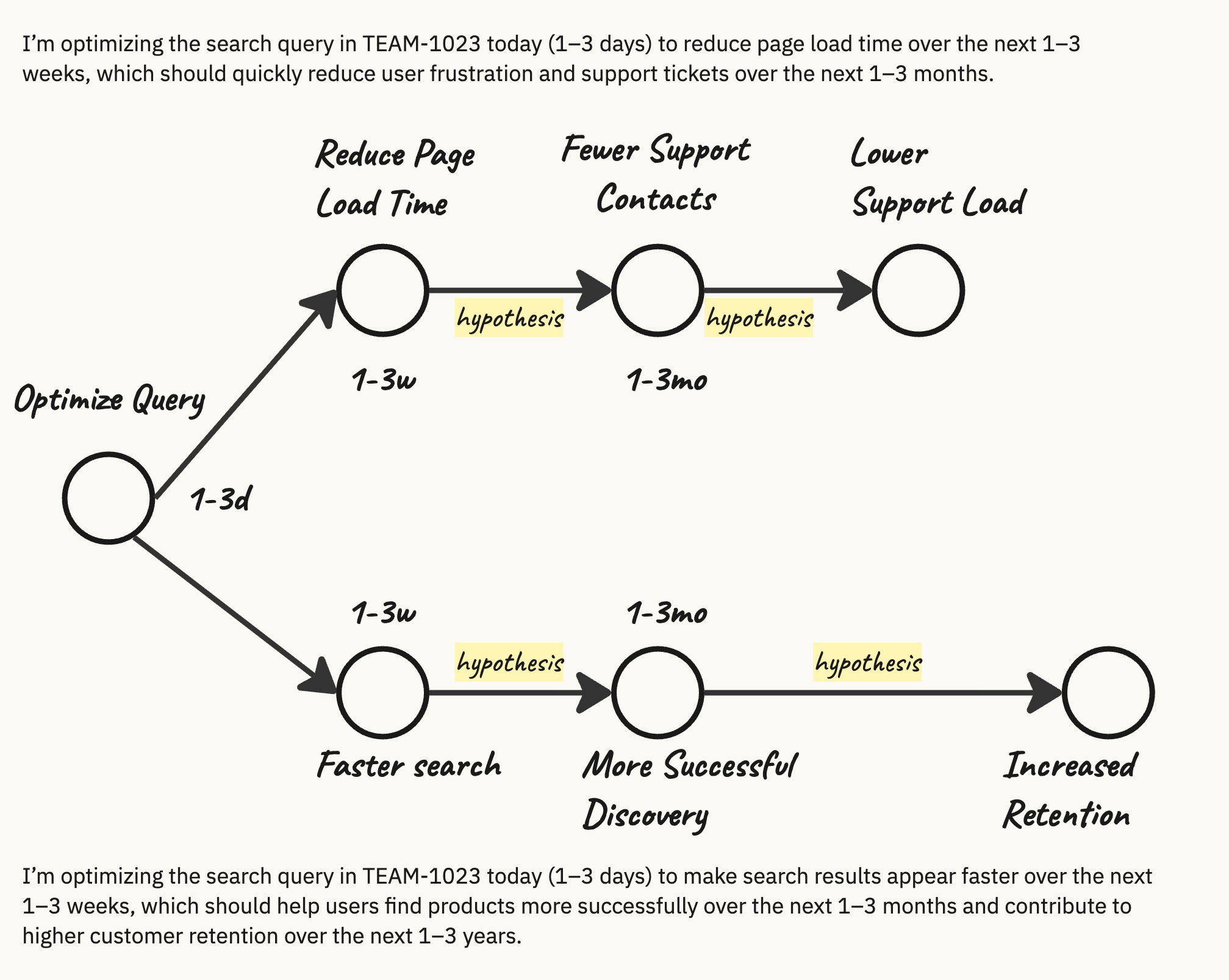
Not all impact paths look the same. One effort may drive immediate sales outcomes, another deeper adoption and retention.
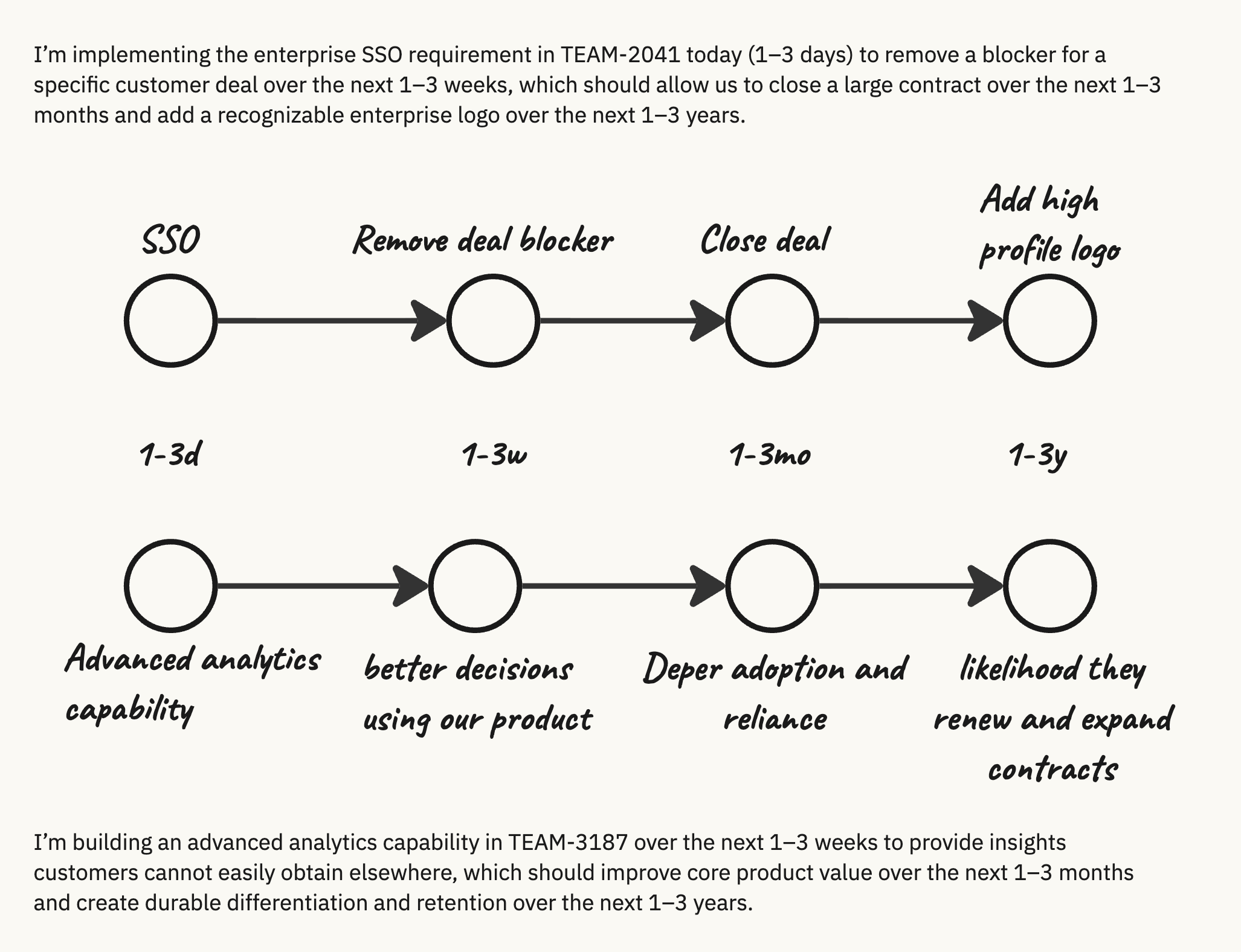
Begin with actionable inputs, specify the immediate effects you expect to see, and then connect those effects to longer-term outcomes.
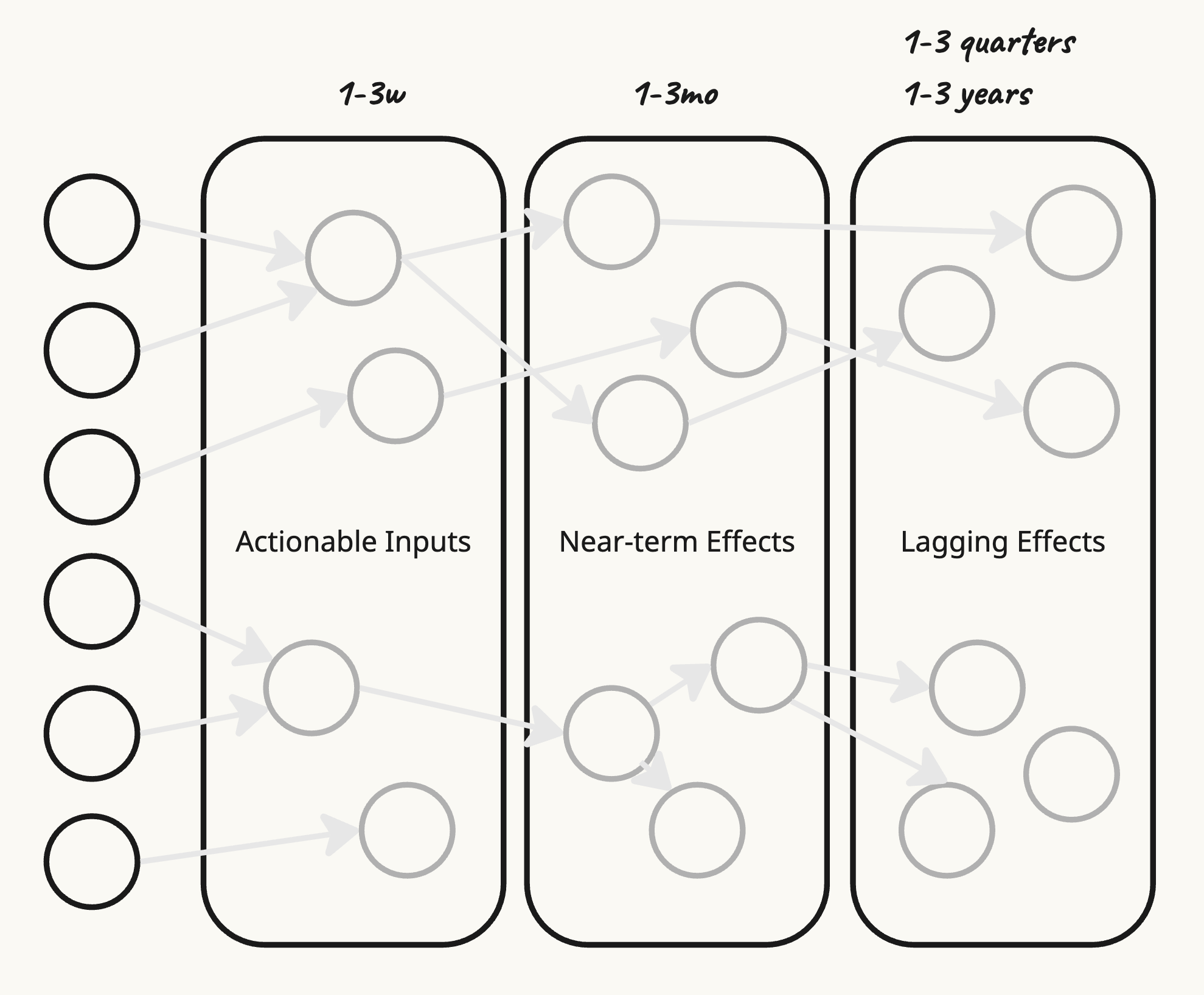
Strategy is about choosing focal points in the system—where to act and what to move—rather than deciding in advance exactly how to act.
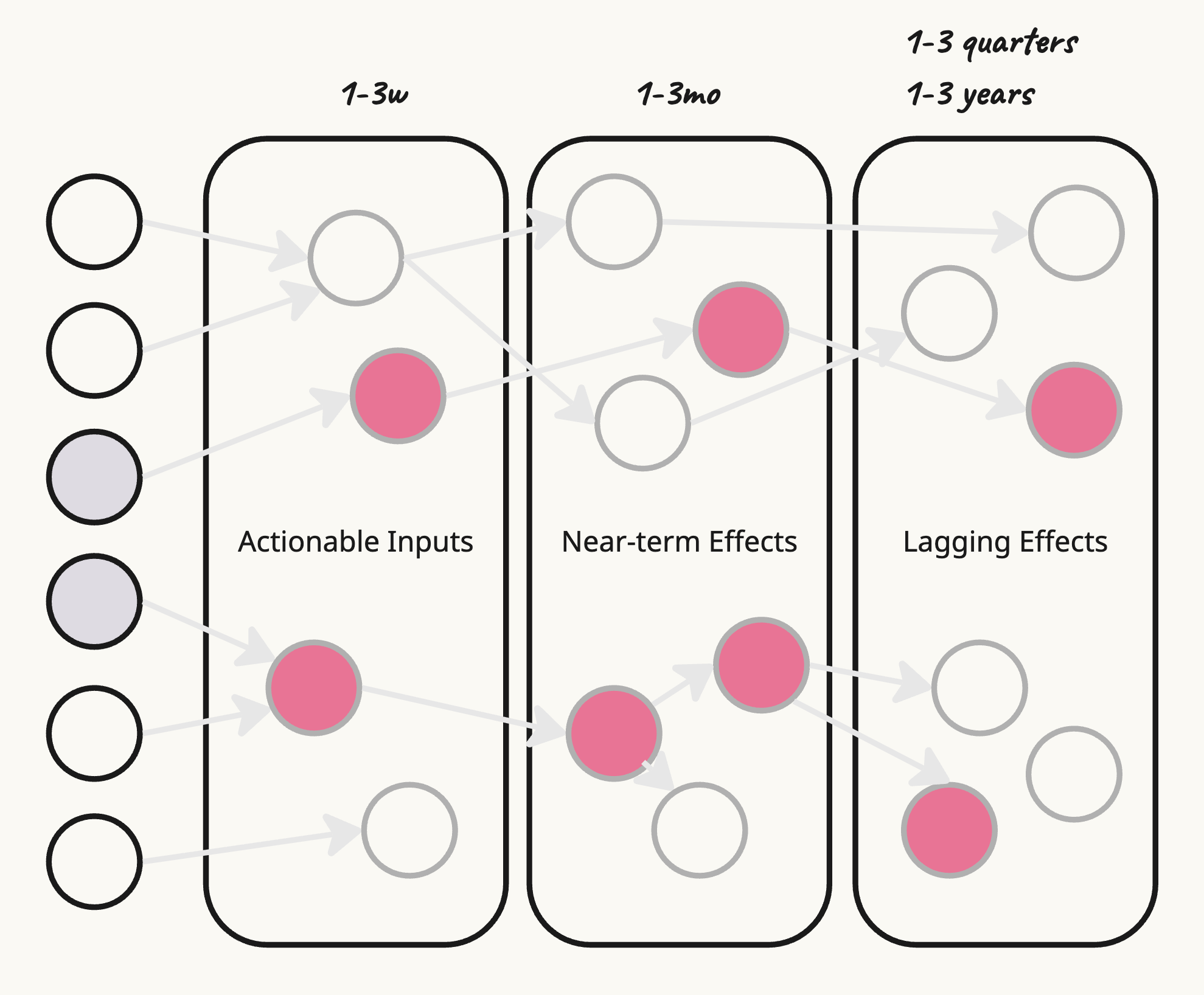
Research and insights help you choose what to try, where to focus, how change is expected to propagate, and how to learn from the results.
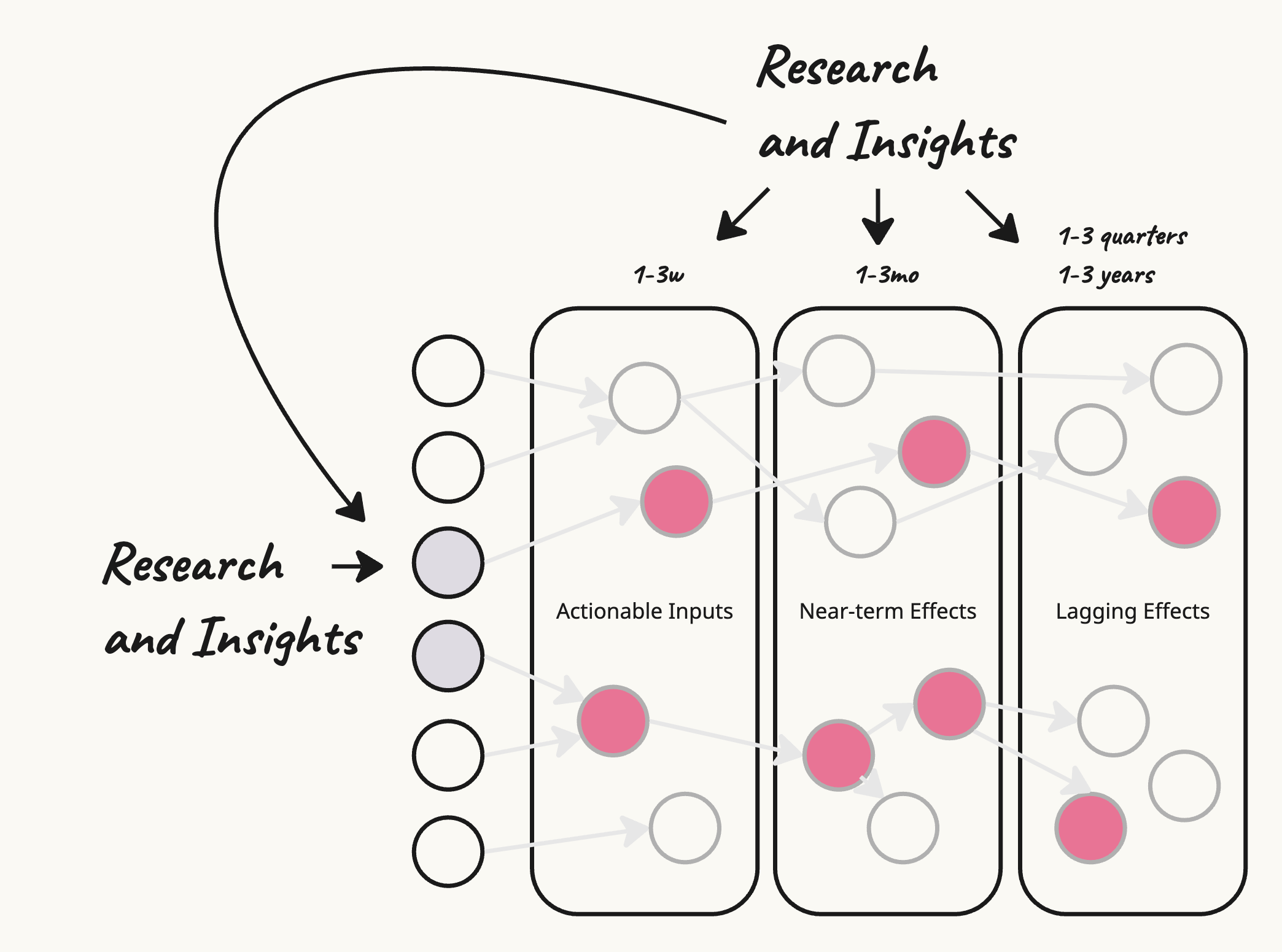
Teams often anchor on a stable set of inputs they can reliably influence. The roadmap is a collection of researched options they may choose to pursue, each paired with a causal hypothesis about what effects it should produce.
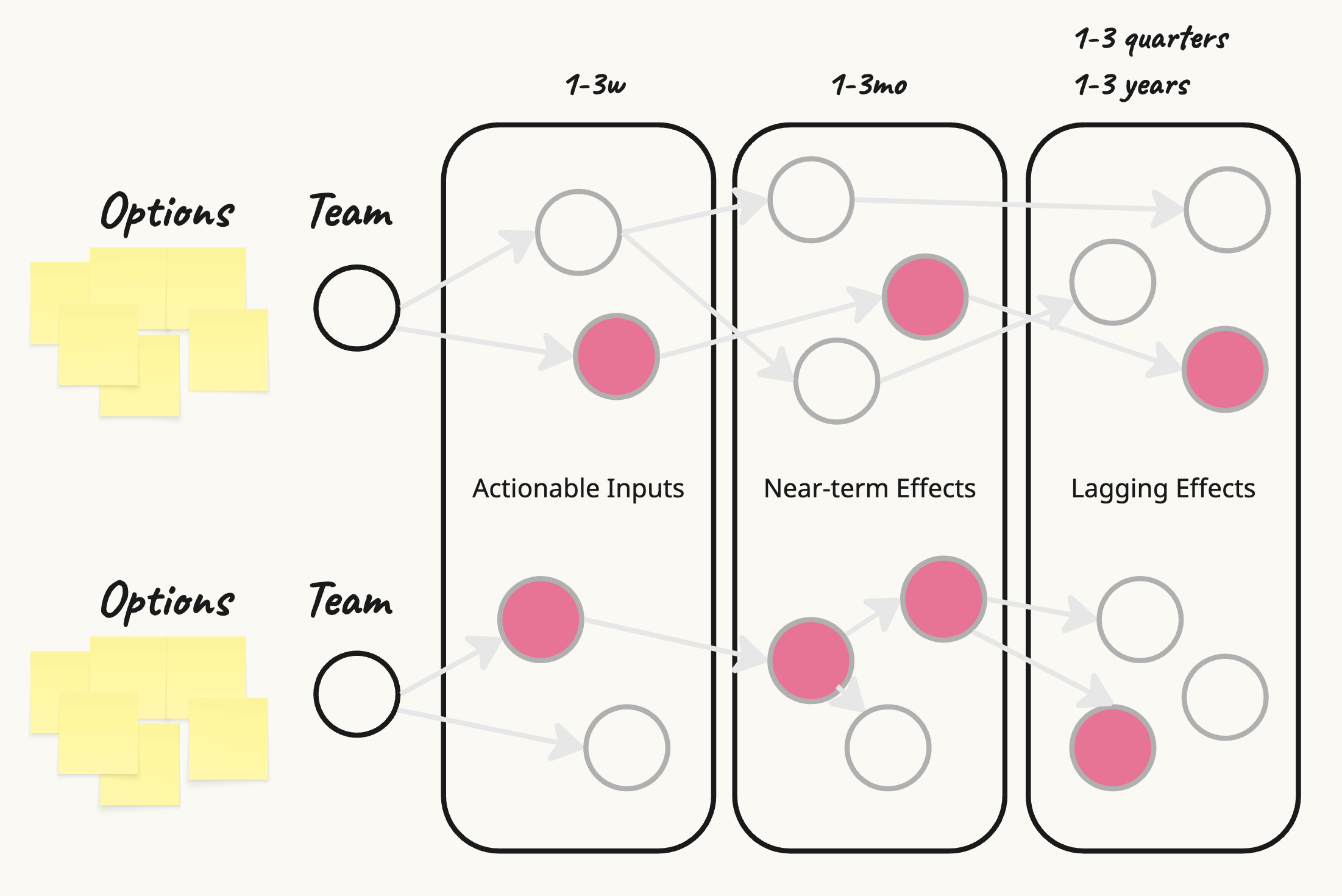
You are not limited to lagging outcomes. Goals can target the actions you take, the signals you expect to see soon, or the results that arrive later.
Rinse and repeat.
Long term attribution has definitely been very elusive and more a "it depends" and "broadly feel we are heading in that general direction". Because as much as we can gather data for correlation we can only attribute things with a confidence percentage - as long as things are rosy it works out. As soon as there is an altering outside in signal (like bad economy, competition in market etc) all rational thinking, data etc walks out because corporate culture switches gears towards survival and flight /fight mode...
The way I have been operating is do plan and analyse for loner horizons and peg strategy for long term direction and movement but measure short term momentum and direction towards that future and in a few quarters and years anyway you will reach those milestones to reflect if the past strategy did broadly get me where I wanted to be. In that sense it has been mixed view of clearer short term decisions based on feedback from past strategy decision meeting reality - > which along with current reality (macro/micro/culture etc) feed-forward towards future strategy decisions