


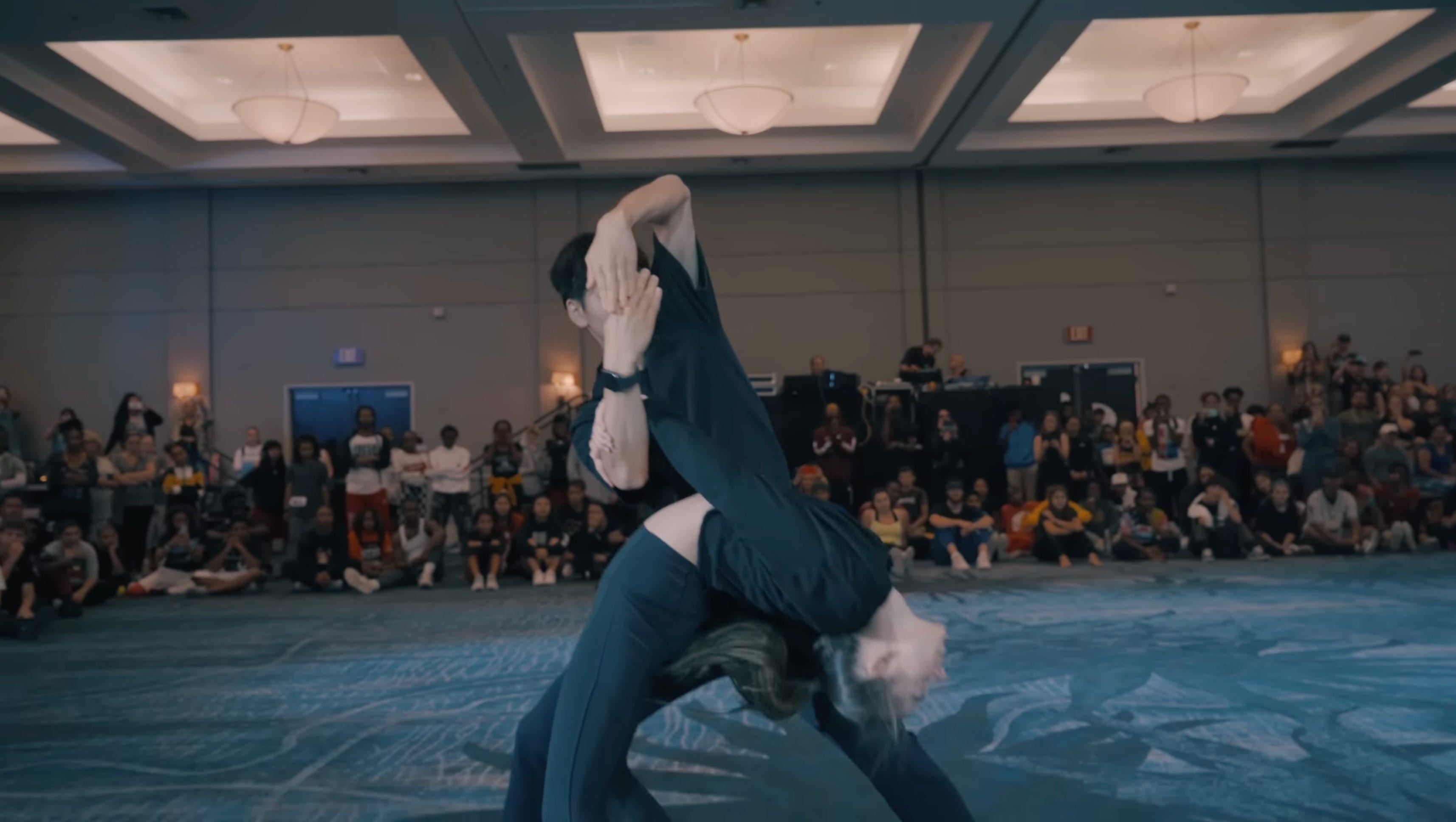
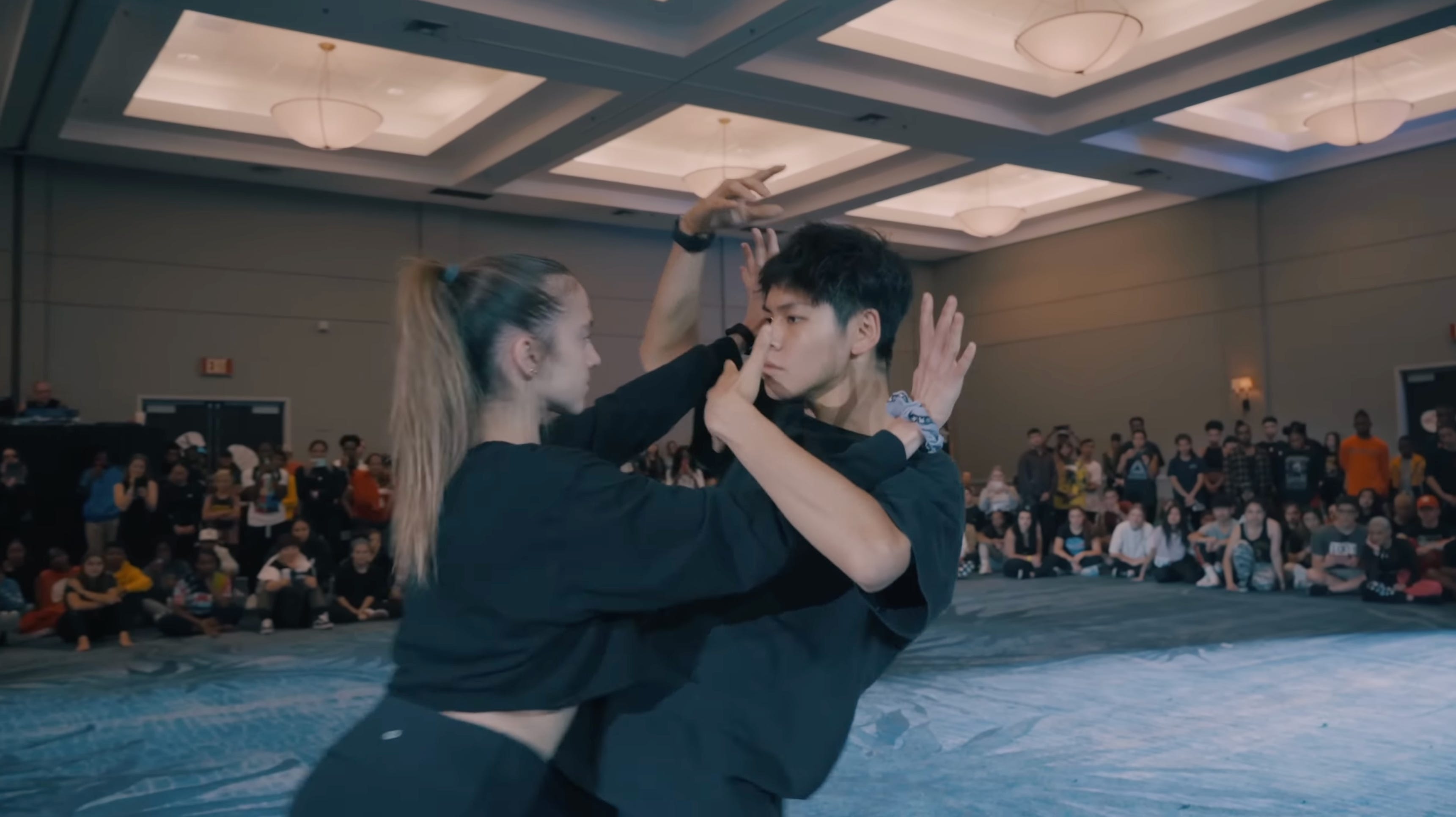
I’ve been isolating in bed with COVID for the last week, with way too much time on my hands to think, watch YouTube, and revisit old favorites, including Sean Lew and Kaycee Rice’s incredible dance to Noah Kahan’s False Confidence.
While the choreography explores the relationship between two people, something struck a chord when I imagined the dancers as different parts of ourselves, sometimes fighting, resisting, supporting, and finding joy in one another.
I wonder why I tear myself down
To be built back up again
That got me thinking about how people (myself included) “self-sabotage” at work. The brain fog has made it hard to write a real piece, but I managed to pull together these thought fragments.
You may be responding to something genuinely wrong. You can find yourself in objectively harmful situations, dealing with toxic behavior, and dysfunctional environments. Recognizing that your response is counterproductive doesn’t (necessarily) mean your perception of the situation is distorted or that the problem exists only in your head.
Self-sabotage can itself be a protective mechanism. As harmful or counterproductive as the immediate consequences may be, the feelings you’re protecting yourself from might seem far more painful or threatening. The behavior may be working against you while also doing something important for you.
Your response may also be rooted in something deeply meaningful. The behavior may be an attempt to protect values, relationships, hopes, or parts of yourself that are sources of strength, meaning, joy, and belonging. The protective strategy may not be working, but that doesn’t diminish the importance of what you’re trying to protect.
We may be protecting what we value by keeping it out of reach. Sometimes our habitual responses allow us to defend our values without fully confronting what it would mean to live by them. We may be avoiding the vulnerability, uncertainty, compromises, or responsibilities that come with actually pursuing what matters to us. In trying to preserve something precious, we may inadvertently prevent ourselves from experiencing it.
We can’t always think our way out of something we need to feel. Thinking, analysis, and even “overthinking” can become learned forms of emotional protection. Intellectualizing can offer a sense of control and distance from painful feelings. That doesn’t make thinking useless, but intellectual understanding isn’t a substitute for emotional experience.

Allowing ourselves to feel can be a powerful act. In difficult situations, one of the hardest things we can do is take a few deep breaths and fully experience what we’re feeling, without immediately reacting, defending, or trying to change the situation. It can feel like surrendering power or letting someone get away with something. But allowing ourselves to feel isn’t the same as giving in. It can free us from our habitual protective responses and give us greater freedom to choose what we do next.
Trying to correct our responses can reinforce the very patterns we’re trying to change. We often imagine that self-improvement means carefully monitoring our reactions, catching ourselves in the moment, and consciously redirecting our behavior. But this can replicate the constant self-surveillance, suppression, and pressure to behave correctly that contributed to the problem in the first place. We risk becoming even more vigilant and self-critical in our efforts to become less reactive.
Self-doubt and rigid conviction can be two responses to the same experience. When we spend years being told our reactions are inappropriate or our perceptions are wrong, we may learn to distrust our own judgment. Or we might learn to fiercely defend our beliefs, even to the point of undermining the very things we care about. Both can become forms of emotional protection. The person who masks may sabotage themselves silently, suppressing their needs and losing touch with their own judgment. The person who fights back may sabotage themselves publicly, damaging relationships and opportunities.
Trying to change others can become a form of emotional protection. We may find ourselves desperately trying to make others more caring, fair, curious, or understanding, partly because we believe we’ll finally feel safe, accepted, or at ease if they change. But there’s only so much influence we have over others. Accepting those limits can bring real sadness, disappointment, and grief. We can acknowledge that loss without excusing harmful behavior, abandoning our values, or giving up on the possibility of change.
The categories we put people into can reveal the roles we’re casting ourselves in. It’s natural to sort people into recognizable types. But when we repeatedly cast others as arrogant leaders, clueless colleagues, or people who “don’t get it,” we may also be casting ourselves as the truth-teller, the misunderstood outsider, or the person who has to fix things. These narratives can make the world feel safer and more predictable. But they can also keep us locked in familiar roles and conflicts, even as we resist being reduced to someone else’s categories.
Work can be an especially difficult environment for navigating identity and emotional protection. Its ordinary mechanisms, including power, evaluation, self-monitoring, self-regulation, and judgments about acceptable behavior, operate through the very psychological dynamics we’re trying to untangle. Complicating matters, the very traits and behaviors that trigger our protective responses, such as dominance, overconfidence, and dismissiveness, can also be rewarded and help people rise to positions of power.

Not everything we feel is something we need to regulate or overcome. It’s human to crave belonging, care, support, camaraderie, and meaningful relationships. When workplaces or people fail to provide these things, our disappointment isn’t necessarily a failure of emotional regulation. Sometimes we’re experiencing a genuine loss. We can acknowledge that loss, grieve what isn’t available, and decide what to do next without treating our needs as something we must overcome.
It’s okay to complain, to feel disappointed, and to be let down. Not every complaint is negativity, and not every disappointment is something we need to reframe or regulate away. Workplaces can fall short of their promises. People can behave badly. Things we care deeply about may never materialize. Talking about these experiences, sometimes just to be heard or find solidarity, is a normal part of being human. We don’t have to turn every frustration into a lesson, a solution, or an opportunity for personal growth.
We can have real adversaries without letting them take over our inner lives. Some people genuinely oppose our values, threaten what we care about, or seek to undermine us. Our anger and resistance can be entirely justified and fiercely passionate. But when the battle consumes us, shapes our identity, or becomes something we can’t let go of, we risk giving those people even more power over our lives. We can stand up for what matters without making our peace dependent on defeating those who threaten it.
Continuous self-improvement can become its own trap. We can turn self-awareness, emotional regulation, and even inner work into another set of standards we must live up to. Every difficult reaction becomes evidence that we have more work to do. The pursuit of becoming healthier, more balanced, or more effective can itself become a protective strategy, keeping us from experiencing the very feelings we’re trying to work through. Instead of learning to accept ourselves, we become increasingly sophisticated at finding things to fix.
Our deepest commitments can come from places of both love and hurt. Our identity can be rooted in both deeply held values and painful personal experiences. These experiences can become sources of tremendous strength, meaning, and positive change, even as they sometimes activate protective behaviors that work against us. We shouldn’t mistake the presence of hurt for evidence that our convictions are misguided, nor assume that the strength and authenticity of our passion mean there is no hurt underneath.
Not every threat response is a false alarm, and not every tension needs to be resolved. We’re often told that our reactions are outdated survival mechanisms. The classic “you’re not on the savannah about to be killed by a cheetah” argument. But reality isn’t neatly divided into real and imagined threats, adaptive and maladaptive responses, or needs we should embrace and those we should overcome. We can simultaneously need belonging and independence, safety and challenge, connection and dissent. The goal isn’t to eliminate these tensions or reprogram ourselves to stop feeling them, but to become more comfortable navigating them.
Acceptance doesn’t mean deciding that we can’t change things. We may be able to change a difficult situation, influence others, or challenge an injustice. Or we may not. The difficult part is accepting that we don’t always know, and that our efforts may not succeed. We can care deeply, take action, and pursue change without needing to control the outcome or make others respond as we hope.
Denying our agency can become a form of emotional protection. Sometimes it’s easier to convince ourselves that we have no choices than to face the uncertainty, responsibility, and potential pain of exercising them. We may have less control than we’d like, and our efforts may fail. But acknowledging those limits doesn’t mean denying the choices we do have.
The search for an explanation can be both liberating and constraining. Discovering why we think, feel, or behave a certain way can bring enormous relief, clarity, and self-acceptance. It can help us better care for ourselves, recognize what we need, and seek accommodations and support. But explanations can also become labels we feel trapped by, or stories about ourselves that limit what we believe is possible. We may swing between finding freedom in an explanation and feeling constrained by it, sometimes experiencing both at once.
Our work and our workplace are not the same thing. We can care deeply about our work without making every workplace conflict a referendum on our values, competence, or identity. Sometimes protecting what we love about our work means accepting the limitations of a particular workplace, choosing our battles, or moving on. We don’t have to win every local struggle to remain true to what matters to us.
Our relationship with work changes as we grow. What we needed, valued, and sought from work in our 20s may be very different from what matters to us in our 40s or 50s. Looking back, we may wish we’d learned certain lessons earlier, avoided particular traps, or cared less about things that consumed us. But perhaps some of those experiences were necessary parts of becoming who we are. Growth isn’t always about learning to do things better. Sometimes it’s about changing what matters to us, what we’re willing to tolerate, and what we no longer need to prove.
Maybe we need to learn to dance with ourselves, rather than constantly trying to fix ourselves. I love Sean Lew and Kaycee Rice’s dance to Noah Kahan’s False Confidence. There’s that line, “I wonder why I tear myself down,” and later, “Surrender yourself.” Sean Lew described his intention with the choreography as creating an experience where two people could be vulnerable and silly together. But I love another interpretation: imagine the two dancers as different parts of ourselves, sometimes fighting, resisting, teasing, supporting, and finding joy in one another. What if the goal isn’t to make one part win, or finally become the person we think we should be? What if we could learn to dance with all these parts of ourselves instead?

I wanted to send a huge thank you to my paid subscribers. They don’t get anything in return but still support the newsletter. Until recently I didn’t have a way to do a one-off tip. But now I do. I you like the newsletter, consider…
Thank you for this, John. I've had a year of exactly the kind of self-examination you're describing - job change, plenty of legitimate frustration, and a lot of earnest effort to "fix" my responses to it. This past weekend that work got reinforced from an unexpected direction: the '15 Commitments of Conscious Leadership' on Audible, which sent me down a rabbit hole of honest self-assessment. And then to read your piece today? The timing.
"You may be responding to something genuinely wrong" was permission I didn't know I needed. I'd been diligently reframing a real disappointment, and your point that some frustration is genuine loss - not a regulation failure - gave me back the right to just feel it.
The book's core distinction - above the line (open, curious) vs. below the line (closed, defensive) - has been a useful mirror this weekend. But your piece adds what the book doesn't: the warning that continuous self-improvement can become its own trap. It's remarkably easy to turn inner work into one more standard to fail at - or into fifteen commitments to comply with.
Thank you for writing through the brain fog. It doesn't show.
Writing this was time well spend, thank you